

Continuing the call: Highlighting disparities in fertility treatment for Black patients
In this blog, also featured in Affinity Magazine, our Authority Member Professor Geeta Nargund marks two years since the publication of our call to action and discusses some of the disparities Black patients are facing when accessing fertility treatment.
Fertility treatment has changed rapidly since the HFEA was first set up almost 35 years ago, — from the rise in the number of IVF babies born to the technological and scientific advances that have been made. Despite this, our data has highlighted inequalities in access to, and outcomes of, fertility treatment. It’s been two years since we published our call to action to ensure that Black patients and their partners are not left behind in access to and experience of fertility treatment. It was published with our second Ethnic diversity in fertility treatment (EDR) report, which found that treatment outcomes for Black patients varied widely in comparison to White patients.
The lowest IVF birth rates across all patient groups
The UK was the first country to pioneer IVF almost fifty years ago and our data shows that it is helping more people have babies, with our recent Fertility Trends 2023 report finding that roughly one child in every classroom is now born from IVF. As more people turn to IVF to try and increase their chances of success, the odds appear to be against Black patients as they have the lowest IVF birth rates across all patient groups. In 2022-23, the birth rate for Black patients aged 18-37 was 25% compared to 27% for Asian patients, 30% for patients from a Mixed background and 33% for White patients.
Although both of our EDR reports have identified variations in treatment outcomes for Black patients, there are several reasons why this is the case including underlying gynaecological or other health conditions as well as cultural, social, economic and structural factors, including stigma.
Early referrals from GPs to specialist services are key
Perhaps the most important factor that is linked to the success of treatment is the age of the patient when they start treatment. According to our Fertility Trends 2022 report, the average age of women who are starting IVF treatment for the first time is now over 35. As success rates fall with age, the reasons for the disparities that are impacting Black patients’ treatment outcomes should urgently be resolved to increase success rates for Black patients.
Data from the HFEA dashboard shows that from 2018-2023, Black patients between the ages of 40-44 had almost 2,700 IVF cycles, while White patients in the same age group had almost 55,200 IVF cycles. The difference in these numbers highlights the need to tackle the disparities that might be delaying Black patients from starting fertility treatment. We continue to stress the importance of early referrals for Black patients so that they can access specialist advice and investigations, if needed, sooner rather than later to improve their chance of success. As part of our response to the government consultation on the ten-year plan, we are calling for fertility services to be situated within wider gynaecological units to ensure streamlined care for patients from start to finish.
Breaking down the barriers to access
The fertility sector is a unique area of healthcare in that a large portion of patients pay for treatment themselves, with just 35% of patients receiving NHS funding in 2023, which can take an emotional toll and even cause delays in starting treatment. Looking at Black patients specifically, the number of NHS-funded cycles among Black patients fell from 44% in 2013 to 22% in 2023. A commonly used metric in funding eligibility criteria is body mass index (BMI). Several studies point to Black patients being more likely to have a high BMI but experts argue that Black people are not included in BMI research. This could be putting Black patients at a disadvantage when they try to access funding.
We encourage those who commission fertility services to review their eligibility criteria and consider whether these have an adverse impact on access to treatment.
Creating lasting change for Black patients
There is no room for the health inequalities that exist within fertility treatment. As the landscape of the fertility sector continues to change, it’s more important than ever to ensure that the disparities that are having an impact on Black patients’ experience of treatment are fully understood and tackled so that they can have equal access to fertility treatment.
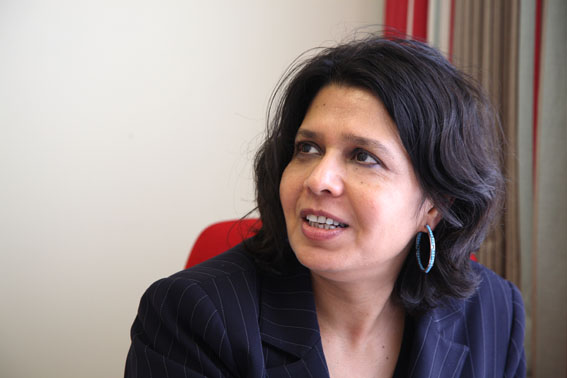
About the author
Geeta is the Lead Consultant for Reproductive Medicine at St George’s Hospital NHS Trust and the Founder of Create Fertility and abc IVF. She has published nearly 100 research papers including book chapters and editorials. Her research interests include mild approaches in assisted reproduction, affordable and global access to fertility care, education in reproductive health in schools and advanced ultrasound technology in reproductive medicine.
| Publication date: |
|---|
